Every year starts with good intentions. We promise ourselves that this time will be different more focus, more discipline, better results. Yet by mid-year, many goals quietly fade into the background. The problem isn’t motivation or willpower. It’s how goals are set in the first place.
If you want 2026 to be the year your goals truly stick, you need a smarter, more human approach one that works with your real life, not against it. This guide will help you create goals that feel exciting, realistic, and achievable, without burnout or guilt.
Why Most Goals Fail Before February
Before setting better goals, it’s important to understand why so many fail:
- They’re too vague (“get healthier,” “make more money”)
- They’re based on pressure, not desire
- They rely on motivation instead of systems
- They ignore time, energy, and reality
Goals fail when they’re built on wishful thinking instead of clarity and structure.
Start With the Life You Want Not the Habits
Instead of asking, “What should I do in 2026?” ask a better question:
“How do I want my life to feel by the end of 2026?”
This emotional anchor keeps your goals meaningful. Think in terms of:
- Calm vs. chaos
- Freedom vs. pressure
- Confidence vs. insecurity
- Energy vs. exhaustion
Once you define the feeling, the goals become easier and more aligned.
Choose Fewer Goals (Yes, Fewer)
One of the biggest mistakes people make is setting too many goals. Ambition is great, but overload kills consistency.
A powerful rule for 2026:
- 1–2 personal goals
- 1–2 professional or financial goals
- 1 health or lifestyle goal
That’s it. Fewer goals mean deeper focus and higher follow-through.
Turn Vague Goals Into Clear Outcomes
Clarity is everything. Compare the difference:
| Vague Goal | Clear, Achievable Goal |
|---|---|
| Get fit | Strength train 3 times per week for 30 minutes |
| Save money | Save $300 per month automatically |
| Be more productive | Plan each workday the night before |
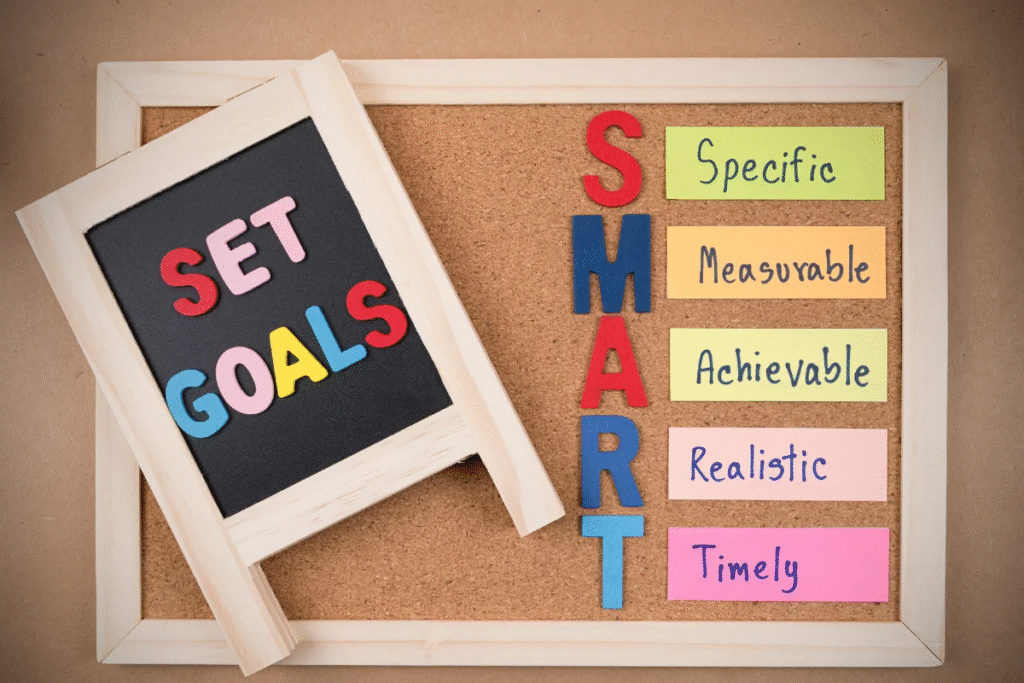
If a goal can’t be measured or scheduled, it’s just a wish.
Focus on Systems, Not Motivation
Motivation comes and goes. Systems stay.
Instead of relying on how you feel, design your environment to support your goals:
- Prepare workouts in advance
- Automate savings and payments
- Remove distractions from your workspace
- Attach habits to existing routines
Success in 2026 won’t come from trying harder it will come from setting things up smarter.

Break Big Goals Into Small, Non-Scary Steps
Big goals fail because they feel overwhelming. Small steps create momentum.
Example:
- Big goal: Start a side business
- Smaller steps:
- Research ideas for 20 minutes
- Buy a domain
- Create a simple plan
- Take one action per week
Progress builds confidence. Confidence builds consistency.
Set “Minimum” and “Ideal” Targets
Perfection kills progress. That’s why flexible goals work better.
| Goal Type | Example |
|---|---|
| Minimum | 10-minute walk |
| Ideal | 45-minute workout |
On hard days, you still win. On good days, you push further. This keeps momentum alive all year.
Schedule Goals Like Real Appointments
If it’s not on your calendar, it’s not real.
Block time for your goals just like meetings or commitments:
- Workout times
- Learning sessions
- Planning and reflection
- Personal development
This turns goals into habits not optional extras.
Track Progress Without Obsessing
You don’t need complex spreadsheets. Simple tracking works best.
- Weekly check-ins
- Monthly reflection
- Quarterly adjustments
Ask yourself:
- What worked?
- What didn’t?
- What needs adjustment?
Flexibility is a strength, not a failure.
Expect Setbacks and Plan for Them
Life will interrupt your plans. That’s guaranteed.
Instead of quitting when things go wrong, decide in advance:
- What happens if I miss a week?
- How will I restart without guilt?
- What’s the smallest action I can take?
Resilience is built by returning, not by never failing.
Align Goals With Your Energy, Not Just Time
Time management isn’t enough. Energy matters more.
- High-energy hours → deep work
- Low-energy hours → simple tasks
- Rest days → recovery and reflection
Working with your natural rhythm makes goals sustainable.
Use Identity-Based Goals
Instead of saying “I want to do X,” shift to:
- “I am someone who trains consistently”
- “I am someone who manages money responsibly”
- “I am someone who follows through”
When goals become part of who you are, actions follow naturally.
Celebrate Progress Not Just Results
Waiting for the finish line kills motivation.
Celebrate:
- Consistency
- Effort
- Small wins
- Improved habits
Progress deserves recognition especially when no one else sees it.
Make 2026 the Year Goals Finally Stick
You don’t need a perfect plan. You need a realistic one. One that fits your life, your energy, and your values.
When goals are clear, flexible, and aligned with who you want to become, achievement stops feeling forced and starts feeling natural.
2026 doesn’t need more pressure. It needs better systems, honest intentions, and consistent action.
Start small. Stay kind to yourself. And build goals you’ll actually achieve.